Long Hair Cow: What Makes These Fluffy Cattle So Special?
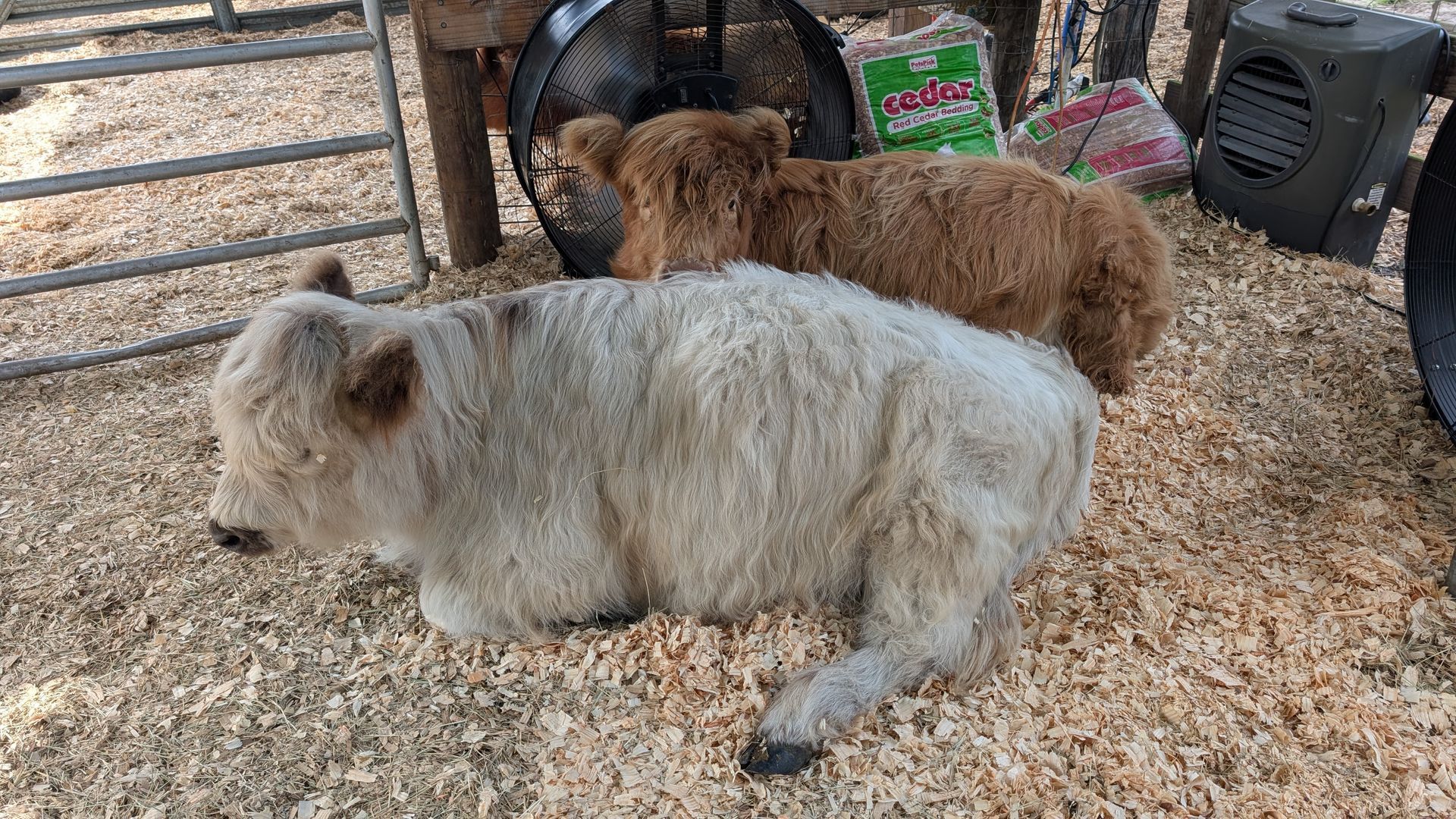
What if a long hair cow’s shaggy coat is more than a cloud-soft look? That tumble of hair has a practical purpose, helping certain cattle handle cold, wet weather. And while “fluffy cow” might bring one familiar face to mind, it isn’t a breed name. Highland cattle are the best-known example, but they’re not the only long-coated bovines.
If you’ve ever wondered what kind of cow has long hair, it’s easy to mix up breeds or assume every extra-fluffy coat is just for show. This guide explains what people mean by a long hair cow, how Highland and Galloway cattle differ, and what their coats can tell you about the environments they’re adapted to.
You’ll also find practical ways to observe cattle respectfully, whether you’re learning from afar or meeting rescued Highland cows at Rooterville Animal Sanctuary
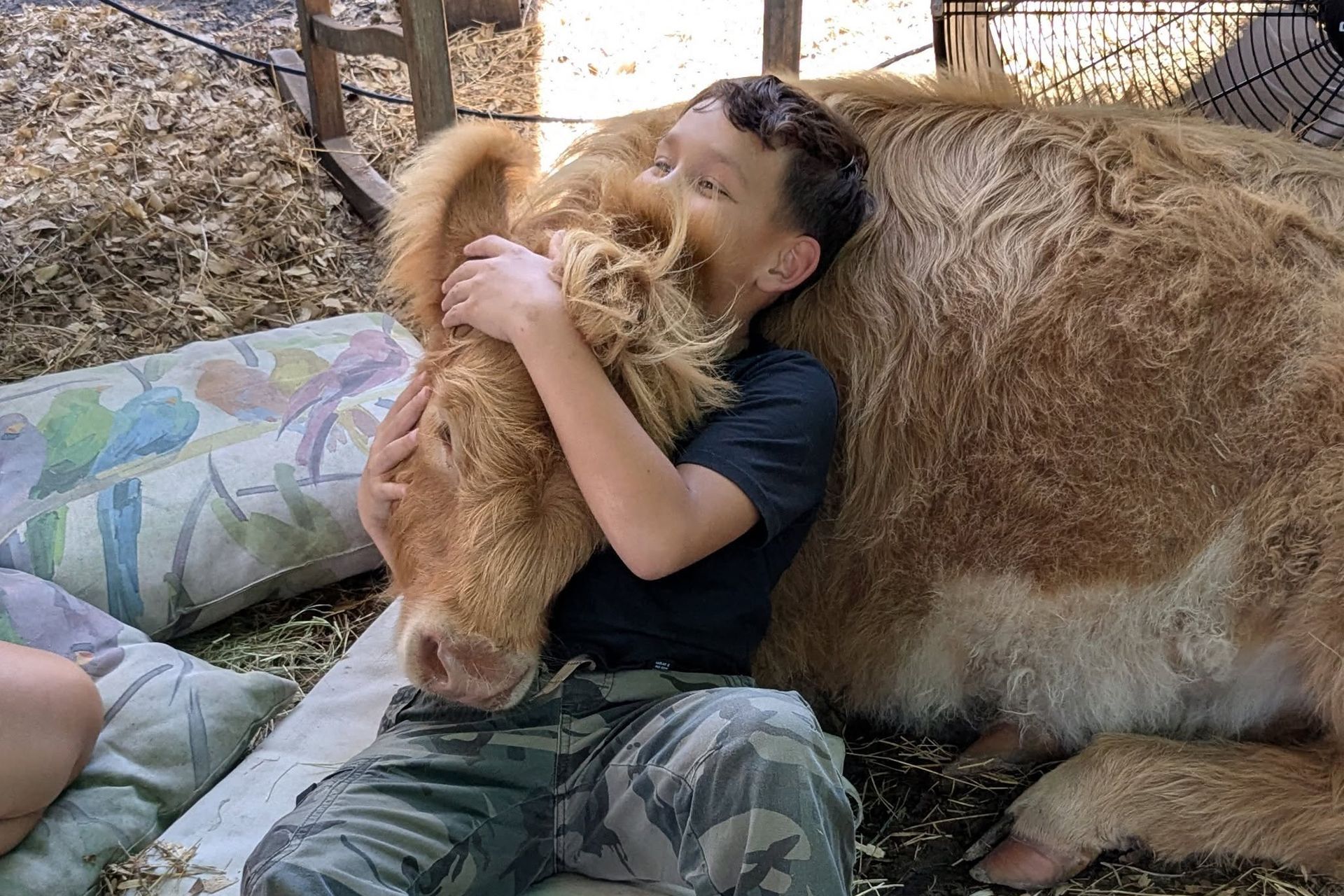
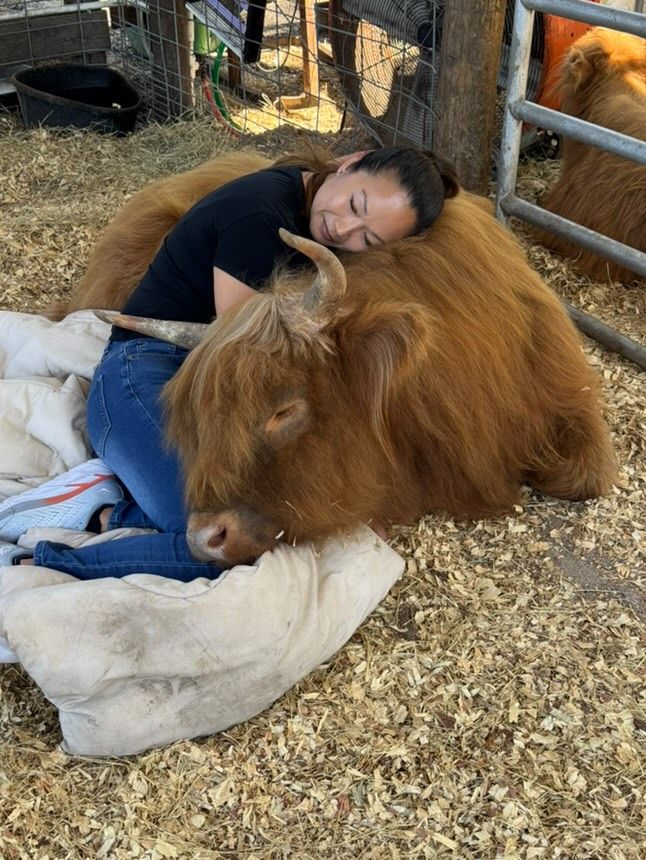
in Melrose, Florida. Private cow-cuddling experiences and farm visits offer a chance to connect with the animals while supporting their care. Let’s meet the fluff and learn what’s beneath it!
Key Takeaways
- “Long hair cow” describes a fluffy look, not one specific breed. Highland cattle are the best-known example.
- A long coat is more than a cozy-looking feature. Its outer hair and undercoat can help cattle cope with conditions in their native environments.
- Visible coat traits can help you compare Highland and Galloway cattle, but they don’t confirm a breed on their own.
- For a respectful cow encounter, follow sanctuary guidance, move calmly, and let staff guide any interaction.
- At Rooterville in Melrose, Florida, visits and experiences with rescued Highland cows support care for rescued farm animals.
Table of Contents
- What Does “Long Hair Cow” Mean? A Clear Guide to the Fluffy Look
- How a Long-Haired Cow’s Coat Works Beyond Its Fluffy Appearance
- Which Cattle Breeds Have Long Hair? Compare the Best-Known Examples
- How to Observe Long-Haired Cows Respectfully and Safely
- Meet Rescued Highland Cows at Rooterville Animal Sanctuary
What Does “Long Hair Cow” Mean? A Clear Guide to the Fluffy Look
A long hair cow is an informal description for cattle with a noticeably long or shaggy coat, not the name of one universal breed. It describes the animal’s appearance but doesn’t identify its breed.
Highland cattle are often the first animals people picture. Their long coats frame their faces and create a shaggy, storybook appearance, which is why the breed is so closely associated with the phrase. But a fluffy coat alone isn’t a breed label. Galloway cattle can also have long coats, and identifying an animal takes more than looking at its hair.
Why Highland Cattle Are Often Called Long-Haired Cows
Look at a Highland and you’ll notice a thick, tousled coat that can fall over the forehead and around the face. Those flowing locks, paired with the breed’s distinctive horns, create a memorable silhouette. The Highland cattle Wikipedia overview offers more background on the breed’s characteristics and history. The key distinction is simple: Highland cattle are a specific breed; “long-haired cow” is a casual description that can apply to more than one kind of cattle.
That means you shouldn’t identify every shaggy animal as a Highland. Coat length is a visible clue, not a complete identification. Galloway cattle may also look long-coated, while crossbred cattle can have a mix of traits. For a particular animal, its breed history or information from its caregivers will tell you more than a quick glance at its coat.
Long Hair, Shaggy Coat, and Fluffy Cow: What the Terms Mean
“Long hair,” “shaggy,” and “fluffy cow” are everyday descriptions, not formal breed names. They capture what you see: plenty of hair, a soft-looking outline, and sometimes a fringe that partly covers the face. Social media loves the extra-cute shorthand, but the nickname can group together animals that aren’t the same breed.
Fluffy doesn’t automatically mean miniature. A long, full coat can make an animal look rounder or smaller than it is, but appearance alone can’t establish its size. Nor can a photograph reveal an animal’s temperament. Hair tells you about the coat’s appearance; it doesn’t prove that a cow is tiny, especially cuddly, or a particular breed.
When you spot a shaggy face in a photo, enjoy the fluff but keep the label flexible. “Long-haired cattle” describes a look; a breed name identifies a more specific type of animal. That distinction helps you appreciate the coat without treating a cute nickname as a reliable identification.
How a Long-Haired Cow’s Coat Works Beyond Its Fluffy Appearance
A shaggy coat is more than a photogenic flourish. In breeds such as Highland cattle, it’s part of an adaptation to the cold, wet conditions associated with their Scottish origins. The coat can help protect the animal from the elements, but it doesn’t guarantee comfort in every climate or type of weather.
What the Outer Coat and Undercoat Can Do
Highland cattle have a double coat: a long, coarse outer layer that can help shed rain and a softer undercoat that provides insulation. Insulation helps the body retain warmth. The outer hairs can grow up to 13 inches long, while the dense layer beneath adds a downy feel. Together, these layers help explain why a long hair cow can look so bundled up.
Galloway cattle also have a double coat, with a coarse outer layer and a softer undercoat. The outer hair helps shed rain, while the undercoat provides insulation. These descriptions apply to these breeds, not automatically to every shaggy-looking cow. The Livestock Conservancy Highland Cattle profile describes traits that help explain the breed’s relationship with its environment, including its ability to forage.
Think of the coat as a useful layer, not an all-weather shield. It offers protection suited to particular conditions, while the animal’s surroundings and care still matter. A thick coat doesn’t mean a cow is comfortable in every temperature or never needs attention from its caretakers.
Why a Thick Coat Does Not Tell the Whole Story
A photograph can show a dense fringe or shaggy outline, but it can’t tell you how an individual animal feels. Coat appearance alone doesn’t establish health, comfort, or how well a cow is coping with its surroundings. Climate, care, and the individual animal all matter.
That’s a useful reminder in Florida, too. Rooterville Animal Sanctuary is in Melrose, but its location alone doesn’t tell you how a particular cow experiences the local weather or what care it receives. Don’t assume a Highland’s thick coat automatically makes it comfortable in heat. The people caring for the cow understand its individual needs.
Curious to see rescued Highland cows in person? A respectful visit to Rooterville Animal Sanctuary offers a chance to learn about these animals in a setting where their care comes first.
Which Cattle Breeds Have Long Hair? Compare the Best-Known Examples
Highland cattle may be the poster cows of the shaggy look, but they aren’t the only breed with a long coat. Galloway cattle share that woolly appearance, though their silhouettes offer different clues. Comparing several traits is more useful than treating every fluffy-looking animal as the same kind of cow.
Coat appearance alone cannot confirm a cow’s breed. Use visible traits as clues, then consider the animal’s overall features and breed background instead of relying on hair length or color alone.
| Breed | Visible Coat Traits | Other Useful Clues |
|---|---|---|
| Highland | Long, shaggy outer coat; hair between the horns forms a fringe called a dossan. | Scottish breed; both sexes have horns. Recognized colors include red, black, brindle, yellow, dun, and white. |
| Galloway | Long, soft, wavy coat, with a coarse outer layer and soft undercoat. | Polled, meaning naturally hornless; recognized colors include black, dun, and red. |
| Belted Galloway | Shaggy coat with a distinct white belt around the middle. | A Galloway type, also polled. |
Highland Cattle: The Familiar Shaggy-Coated Breed
Highland cattle originated in Scotland, and their long coat is one of their most recognizable features. The outer hair can grow up to 13 inches long, while the fringe between the horns, known as the dossan, reaches toward the muzzle. Both cows and bulls have horns, another visible clue that may help distinguish a Highland from a hornless breed such as Galloway.
That familiar outline can make a Highland look especially compact in photos, but a coat doesn’t tell you whether the animal is miniature. “Miniature” describes size, not hairiness, so keep size claims separate from standard breed identification.
Galloway Cattle and Other Long-Coated Examples
Galloway cattle have a long, soft, wavy coat, but their hornless heads give them a different look from horned Highland cattle. Belted Galloways add an especially noticeable marking: a complete white band around the middle of the body. They share the Galloway’s shaggy coat and are also naturally hornless.
These examples aren’t a complete list of every cattle breed or cross that can appear long-coated. Color can help describe what you see, but it isn’t enough on its own to identify a breed. Red, for instance, is a recognized color for both Highland and Galloway cattle. When looking at a real animal, note several traits together, such as coat texture, horns, and distinctive markings. That gives you a clearer starting point than the “fluffy cow” label alone.
How to Observe Long-Haired Cows Respectfully and Safely
A long hair cow may look like a cuddly cloud, but cattle are large animals with their own boundaries and routines. A calm visit starts with paying attention, giving each animal room, and letting the people who know the herd guide the encounter. The clearest rule is: Visitors should follow staff directions around every animal.
What to Do When Viewing Cattle Up Close
Keep your voice gentle and your movements unhurried. Rushing, crowding an animal, or reaching out without guidance can startle it. Horns and size are good reasons to leave respectful space, not reasons to assume cattle are dangerous. A cow may watch from a distance, turn away, or come closer. Let it set the pace.
- Follow sanctuary guidance. Listen to staff before entering or approaching an animal area, and stay where they direct you.
- Move calmly. Use a quiet voice, avoid sudden movements, and give the cow room to respond in its own time.
- Let staff guide interaction. Don’t assume touching or cuddling is permitted. Follow staff instructions and respect an animal that doesn’t seek contact.
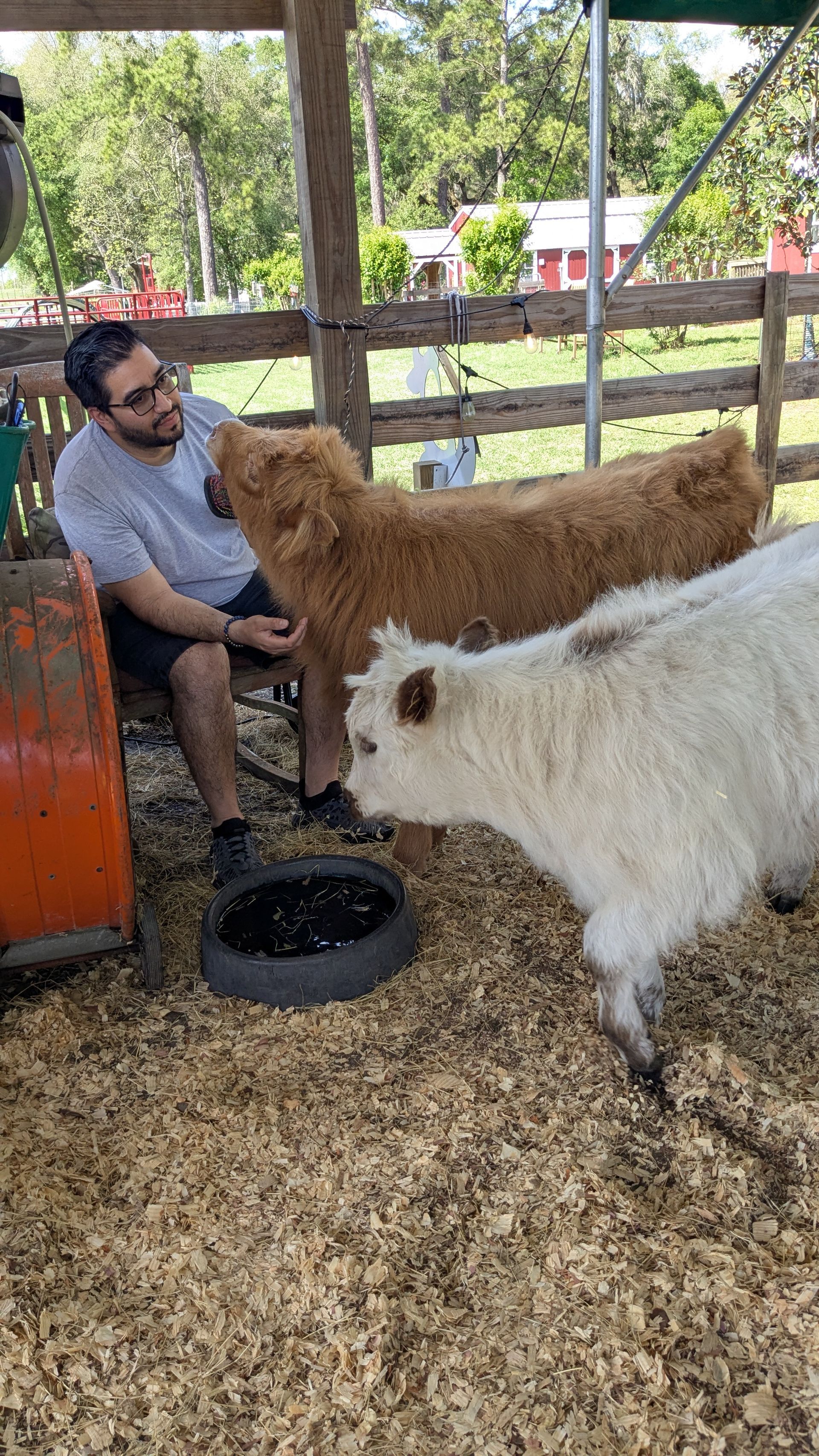
- Follow feeding instructions. Offer food only when staff say it’s allowed and explain what to give. Guests may bring or purchase treats, including baby carrots, sliced apples, grapes, strawberries, blueberries, and bananas. Follow staff guidance about feeding.
Photos can be lovely, but they’re a bonus, not a promise. A cow doesn’t have to approach, pose, or welcome contact for the visit to be meaningful. Quiet observation can be its own special moment.
Plan for a Florida Sanctuary Visit
Rooterville Animal Sanctuary is in Melrose, Florida, between Gainesville and Jacksonville. Walk-in visitor hours are Friday and Saturday, 9 AM to 2 PM. Visits at other times are by appointment, Tuesday through Sunday. Plan around the walk-in hours or book an appointment. Once there, follow sanctuary guidance throughout your time with the animals.
Rooterville is a nonprofit sanctuary caring for rescued farm animals, including Highland cows. Its visits and experiences support animal care, making a thoughtful encounter a chance to learn while contributing to the animals’ well-being. For a closer look at the sanctuary’s visit options,
plan a visit to Rooterville
and meet the cows at their pace.
Meet Rescued Highland Cows at Rooterville Animal Sanctuary
Want to meet a shaggy Highland cow beyond the screen? Rooterville Animal Sanctuary in Melrose, Florida, is a nonprofit sanctuary caring for approximately one hundred rescued farm animals, including Highland cows. Here, the appeal of a fluffy coat comes with a deeper story: each animal is part of a sanctuary community, and visitor experiences help support their care.
A Sanctuary Visit That Supports Rescued Animals
Rooterville was founded in 2004 by Elaine West. Its work centers on caring for rescued farm animals, and the visits and stays offered at the sanctuary connect guests with that mission. All proceeds from stays, experiences, and product sales go directly to animal care.
A visit is more than a photo opportunity with a long hair cow. The animals are residents, not props, and each has its own needs and preferences. Staff guidance helps visitors enjoy the experience respectfully while allowing the cows to decide whether to approach or engage. No particular animal’s participation is guaranteed.
Highland cows are among Rooterville’s residents, but the sanctuary is also home to many other rescued farm animals. A visit offers a broader glimpse of sanctuary life and the care behind it. The focus is connection with the animals and the mission, not a promise that every guest will touch or cuddle a specific cow.
Choose a Way to Experience Rooterville
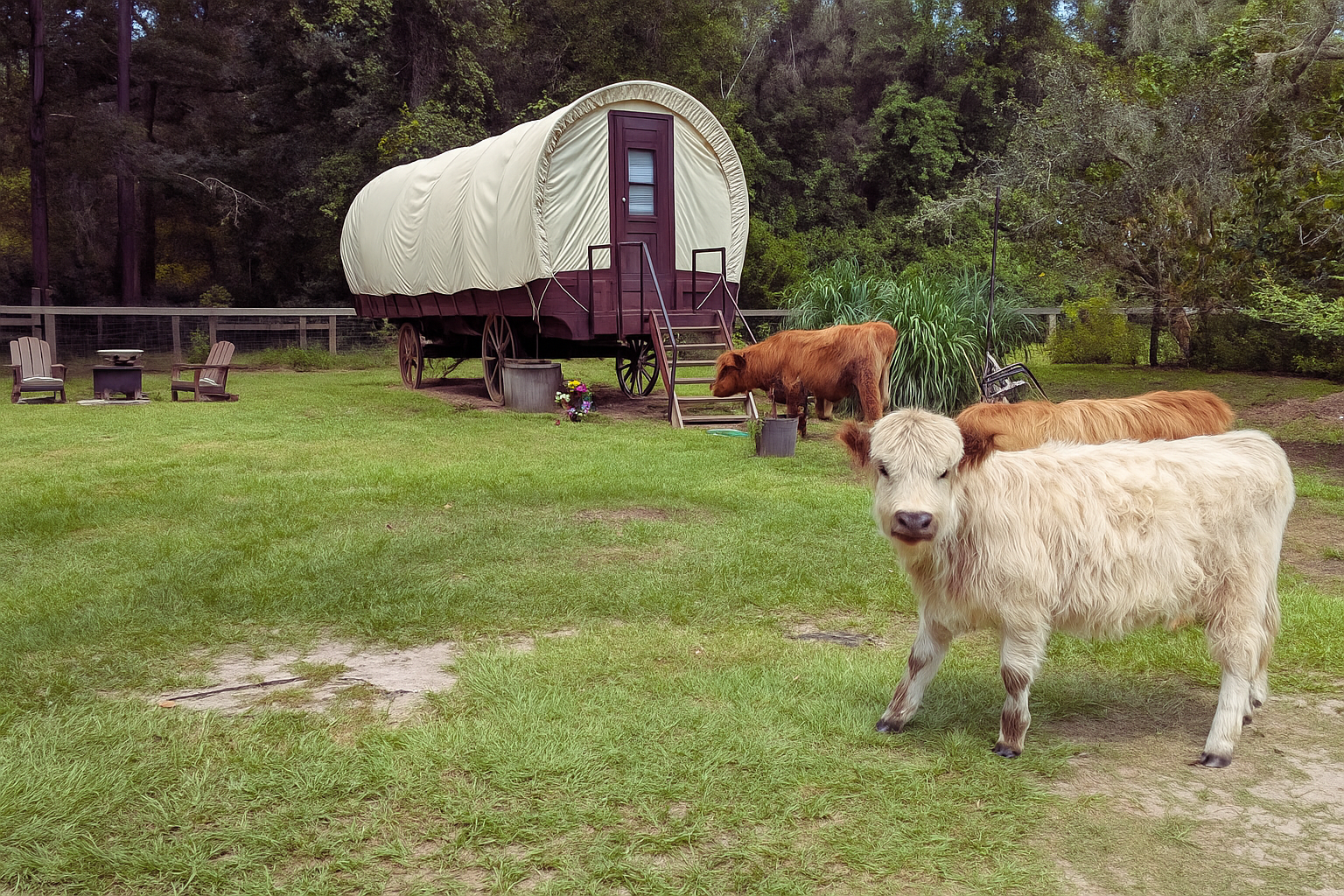
Rooterville offers several ways to spend time at the sanctuary. Walk-in farm visits are available Friday and Saturday from 9 AM to 2 PM, with other visits by appointment. Private cow-cuddling experiences offer a more focused way to connect with cows, guided by staff. Book a cuddle experience at least 24 hours in advance; same-day or last-minute requests can be made by phone. Overnight farm stays, including covered wagons and RV spaces, let guests extend their time at the sanctuary while supporting animal care.
Whichever option you choose, follow staff instructions and let each animal set the pace. The quietest moments can be lovely, too: watching a cow graze, rest, or simply take in the day.
If you’d love to meet rescued Highland cows in a setting built around their care, explore Rooterville’s sanctuary visits and experiences. Come curious, bring a little patience, and enjoy the chance to meet the residents on their terms.
Make Your Fluffy Cow Curiosity a Kind Visit
The phrase “long hair cow” might catch your eye, but meeting rescued cattle can leave you with something more lasting than a cute photo: a closer connection to the animals and the people who care for them. At Rooterville, experiences and farm stays support animal care at a nonprofit sanctuary for approximately one hundred rescued farm animals, including Highland cows.
Rooterville has received recognition as an Airbnb Superhost, a TripAdvisor “Traveler’s Choice” award, and a Hip Camp “Star Host” award. The heart of a visit is simple: come with curiosity, follow the sanctuary’s guidance, and let the animals set the pace.
Whether you’re drawn to a private cow-cuddling experience, a farm visit, or a longer stay, you can choose a way to spend time with the sanctuary. Ready to turn your interest in fluffy cattle into a thoughtful real-world visit?
Explore Rooterville and plan a visit. A little patience and kindness can make your time with these residents even more meaningful.
Frequently Asked Questions
Can long-haired cows see through their bangs?
Sometimes, but you can’t assume every cow sees equally well through its fringe. Hair may fall near the eyes, and vision and coats vary from one animal to another. Don’t move, trim, or handle a cow’s hair yourself, even if it seems to cover the eyes. During a sanctuary encounter, follow the team’s instructions and let the people responsible for the animal decide whether any care is needed.
Do long-haired cows need grooming?
Grooming needs depend on the breed, the individual coat, the animal’s environment, and its care practices. A shaggy appearance alone doesn’t tell you whether a cow needs brushing or trimming, and not every long coat should be cut. Grooming decisions are part of animal care, not a visitor task. Observe from a respectful distance and leave welfare decisions to people with appropriate animal-care expertise.
Can a long-haired cow be kept as a pet?
Cattle aren’t casual household pets. They’re large livestock with ongoing needs for suitable space, food, handling, and attentive care. What responsible care requires can vary with the animal and where it’s kept, so a fluffy coat shouldn’t be mistaken for an easy-care companion. If you’re drawn to cattle but aren’t prepared for livestock responsibilities, a guided sanctuary visit can be a thoughtful way to appreciate them.
How much space does a long-haired cow need?
There isn’t one space figure that suits every long hair cow. Appropriate space depends on factors such as herd size, land condition, shelter, climate, and local requirements. A number by itself can’t show whether the land is suitable or well managed. Responsible cattle care means providing appropriate space and ongoing management, with decisions based on the animals and their actual setting.
Are long-haired cows comfortable in hot weather?
A long coat alone can’t tell you how comfortable an individual cow is or how well it handles heat. Breed and health matter, as do conditions such as access to shade and water, airflow, and the way the animal is managed. Don’t assume a Highland is automatically comfortable in Florida summers. If you’re visiting cattle, follow staff guidance and respect the animals’ welfare and space.
What is a baby long-haired cow called?
A baby cow is called a calf, whether it belongs to a long-coated breed or a short-coated one. Highland calves, for example, may have a soft, shaggy-looking coat that catches the eye. Fluff isn’t enough to identify a calf’s breed; appearance can vary, and coat length alone doesn’t establish its background. Breed information from the people caring for the calf can provide helpful context.